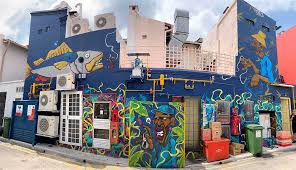
Amid the gleaming skyscrapers and futuristic skyline of Singapore, the city hides a living gallery — a network of murals and kampong scenes painted on walls, alleys, and shophouses. These artworks are not just beautiful; they are powerful storytellers, preserving memories of old Singapore before modernization transformed the island into the global city it is today.
From the narrow lanes of Kampong Glam to the colorful streets of Tiong Bahru and Chinatown, Singapore’s murals serve as windows into its past — depicting everyday life, childhood memories, and the kampong spirit that once defined the nation.
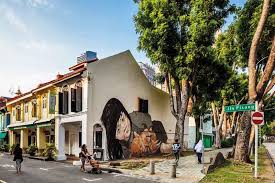 A Journey Through Time on the Walls of Singapore
Murals in Singapore began as a form of community art, created to beautify old neighborhoods and strengthen local identity. Over time, they evolved into something much deeper — a visual diary of Singapore’s transformation.
Today, visitors can explore dozens of murals depicting kampong life, street vendors, traditional games, and family scenes from the 1950s to 1970s — the period when Singapore was a collection of close-knit villages, or “kampongs.”
Walking past these artworks, you don’t just see paint on walls — you see stories of resilience, laughter, and unity.
The Kampong Spirit in Art
The term “kampong spirit” refers to a sense of community, kindness, and togetherness that defined old Singapore before urbanization. Neighbors shared food, helped one another, and celebrated as one big family.
Many murals celebrate this spirit through scenes of:
-
Children playing chapteh or marbles on sandy ground.
-
Mothers hanging laundry outside wooden houses.
-
Street hawkers selling laksa, ice balls, and satay from pushcarts.
-
Families gathering around radio sets or open kitchens.
These paintings bring to life the warmth and simplicity of kampong life — a reminder that progress and tradition can coexist.
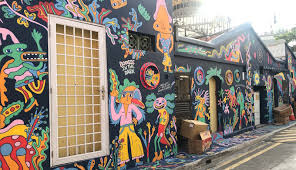 Famous Murals and Artists
🎨 Yip Yew Chong – The Storyteller of Singapore’s Streets
No discussion about Singapore’s mural art is complete without mentioning Yip Yew Chong, one of the country’s most celebrated street artists. His murals, often found in Chinatown, Tiong Bahru, Little India, and Kampong Glam, capture the essence of Singapore’s golden past.
Some of his most famous works include:
-
“My Chinatown Home” – A detailed portrayal of life in a traditional shophouse.
-
“Kampong Gelam Scene” – Showcasing Malay heritage and trade in the historic district.
-
“Pasar and the Fortune Teller” – A charming scene from an old Chinatown market.
-
“Bird Singing Corner” – Inspired by Toa Payoh’s once-famous gathering spot for bird lovers.
His paintings often blend humor, nostalgia, and incredible realism, drawing both locals and tourists to stop, reflect, and smile.
🎨 Other Notable Artists
Singapore’s mural scene has grown beyond one artist — a wave of creative minds has painted their own perspectives across the city:
-
Ripple Root, a duo known for their colorful, nature-inspired works that reinterpret heritage.
-
RSCLS (Rebels), a street art collective bringing bold, contemporary styles to old walls.
-
Slac Satu and Zero, pioneers of graffiti art in Singapore’s urban spaces.
Together, these artists form a dynamic blend of tradition and modern expression — keeping Singapore’s visual culture vibrant and evolving.
Top Places to See Murals and Kampong Scenes in Singapore
🏘️ Tiong Bahru
This charming art-deco neighborhood is filled with murals that celebrate daily life in the old days. Yip Yew Chong’s famous “Home” mural shows a family sharing a meal, surrounded by retro details — radios, enamel cups, and vintage posters.
Every corner in Tiong Bahru tells a story, making it a favorite stop for photographers and culture lovers.
🕌 Kampong Glam
Once a royal Malay enclave, Kampong Glam is now a fusion of heritage and hip culture. Murals here depict traditional Malay scenes, vibrant textiles, and community markets.
The colorful “Children Playing” mural by Yip Yew Chong, near Aliwal Street, captures joyful moments from a bygone era. You’ll also find modern graffiti-inspired art that merges tradition with youth culture — a reflection of Singapore’s evolving identity.
🏮 Chinatown
Chinatown’s murals bring its rich history to life — from scenes of Samsui women carrying bricks to coolies unloading goods by the river.
The “Letter Writer” mural is one of the most photographed — a tribute to the humble men who once helped residents read and write letters in pre-digital days.
Another highlight is the “Mid-Autumn Festival” mural, featuring lanterns and mooncakes that light up the nostalgia of Chinese heritage.
🌸 Haji Lane and Arab Street
Haji Lane is known for its colorful shophouses and lively murals that blend pop culture with tradition. While many are modern in style, some feature kampong-inspired elements — reminding visitors of the neighborhood’s historical roots.
It’s also one of the best spots for street photography, with walls constantly evolving as new artists contribute to the scene.
🪴 Everton Road
Often called Singapore’s “outdoor heritage gallery,” Everton Road features several nostalgic murals that depict domestic life from the 1970s.
Look for “Barber”, “Provision Shop”, and “Mama Shop” — charming pieces that bring you back to a simpler time when daily life revolved around neighborhood shops and familiar faces.
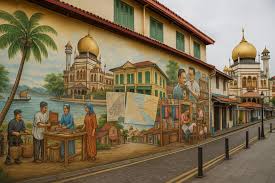 The Role of Murals in Modern Singapore
Beyond nostalgia, murals in Singapore play a bigger role — they bridge generations and cultures.
Older residents see these artworks as reminders of their youth, while younger Singaporeans and tourists view them as educational and inspiring. The murals have become conversation starters, drawing families, schools, and visitors into shared appreciation of local history.
They also promote community pride, turning forgotten alleys into living museums and connecting art with everyday spaces.
Photography and Street Exploration
Exploring murals and kampong scenes has become one of Singapore’s most enjoyable outdoor activities.
Visitors can embark on self-guided art trails, or join walking tours led by heritage enthusiasts. Early mornings and late afternoons offer the best lighting for photography, especially in areas like Chinatown and Everton Park, where sunlight casts warm hues on the vintage walls.
Each mural invites you to slow down and notice the little details — the expressions on faces, the textures of old bricks, the color palettes that mirror Singapore’s cultural diversity.
Preserving Heritage Through Art
Murals have helped keep the spirit of old Singapore alive, even as the city continues to modernize.
Government bodies and local organizations such as the National Heritage Board (NHB) and Our SG Heritage Plan support these projects, recognizing them as vital parts of the nation’s living heritage.
By merging creativity and culture, Singapore ensures that future generations can still experience what kampong life once felt like — not through textbooks, but through art that lives and breathes on the city’s walls.
Why You Should Explore Singapore’s Murals & Kampong Scenes
-
🎨 Free and Accessible Art: No museum tickets — just open-air galleries for everyone.
-
🕰️ History on Walls: Learn about daily life, traditions, and values of early Singapore.
-
📸 Perfect for Photography: Vibrant colors and cultural details make beautiful photos.
-
👣 Walkable Trails: Great way to explore neighborhoods like Chinatown and Tiong Bahru.
-
❤️ Emotional Connection: Feel the warmth of old Singapore through art and stories.
Whether you’re a traveler seeking authenticity or a local rediscovering your roots, Singapore’s murals offer a meaningful, visual journey through time.
Conclusion
Murals and Kampong Scenes in Singapore are more than artistic decorations — they are cultural landmarks that preserve the island’s soul. Each wall, brushstroke, and character tells a story of family, friendship, and resilience.
Through the hands of artists like Yip Yew Chong and many others, Singapore’s kampong spirit continues to live on — not in dusty archives, but on vibrant walls where art meets memory.
So next time you walk through a quiet alley in Singapore and spot a mural, take a moment to pause. Behind every painted wall lies a story of a nation — one that remembers its past while embracing its future.
Leave a Reply