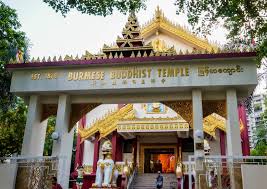
Singapore is a multicultural city where religions and traditions from around the world coexist harmoniously. Among its many temples, the Burmese Buddhist Temple stands out as a unique cultural landmark. Located near the Novena district, it is the oldest Theravada Buddhist temple of Burmese origin in Singapore.
With its striking Myanmar-style architecture and the presence of one of the largest pure white marble Buddha statues outside Myanmar, this temple offers visitors a serene experience that combines history, culture, and spirituality.
In this article, we will explore the origins, design, significance, and visitor experience at the Burmese Buddhist Temple in Singapore.
 History of the Burmese Buddhist Temple
The roots of the temple trace back to 1875, when U Thar Hnin, a Burmese timber merchant living in Singapore, established the original temple at Kinta Road. The purpose was to provide a place of worship for the growing Burmese community in Singapore.
Later, in 1878, the temple relocated to Kinta Road in Little India. Over time, the temple became a gathering place not only for Burmese Buddhists but also for local devotees of Theravada Buddhism.
In the 1980s, the temple committee decided to move to a larger site to accommodate its growing role in Singapore’s religious landscape. The temple was rebuilt on Tai Gin Road, near Novena, and officially reopened in 1991. Since then, the Burmese Buddhist Temple has stood as a cultural and spiritual beacon for both Burmese expatriates and local Singaporeans.
Architecture and Design
The Burmese Buddhist Temple is an architectural gem, distinct from Chinese and Thai Buddhist temples commonly found in Singapore.
Key architectural features include:
-
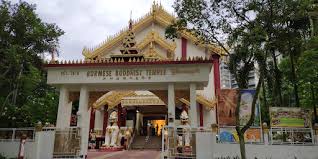
Myanmar-Inspired Design: The temple’s architecture is heavily influenced by traditional Burmese styles, characterized by golden embellishments, tiered roofs, and intricate carvings.
-
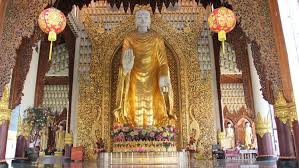
White Marble Buddha Statue: The highlight of the temple is the 11-foot (3.3 meters) high statue of Buddha carved from a single block of white marble. It was brought from Sagyin Hill, Mandalay, Myanmar, in 1921. This statue is one of the largest of its kind outside Myanmar.
-
Ornate Interiors: The temple’s main hall is adorned with teak wood carvings, gold-leaf decorations, and murals depicting Buddhist stories.
-
Peaceful Courtyard: The temple grounds include serene spaces for meditation, reflection, and community gatherings.
The temple’s design reflects not only Burmese aesthetics but also the principles of Theravada Buddhism, emphasizing simplicity, devotion, and harmony.
 Spiritual Significance
The Burmese Buddhist Temple plays a vital role in the spiritual life of the Burmese community in Singapore. It is dedicated to the Theravada Buddhist tradition, the most widely practiced form of Buddhism in Myanmar.
-
Daily Worship: Devotees come to offer incense, flowers, and prayers at the marble Buddha statue.
-
Meditation Practices: The temple is a center for meditation, attracting practitioners who seek peace and mindfulness.
-
Teachings and Dharma Talks: Monks conduct sermons, chanting, and guidance on Buddhist philosophy and practice.
-
Festivals: Major Buddhist festivals such as Vesak Day and Thingyan (Burmese New Year Water Festival) are celebrated with great devotion, attracting large crowds.
Cultural Importance
Beyond its religious significance, the Burmese Buddhist Temple is a symbol of Singapore’s multicultural identity. It highlights the contributions of the Burmese community, which has played an important role in the nation’s development since the 19th century.
The temple also serves as a cultural bridge, introducing Singaporeans and international visitors to Burmese traditions, art, and spirituality. For many, it offers a chance to experience Myanmar’s unique religious heritage without leaving Singapore.
Visiting the Burmese Buddhist Temple
If you are planning to explore the Burmese Buddhist Temple during your trip to Singapore, here’s what you need to know:
-
Location: 14 Tai Gin Road, Singapore 327873, near Novena MRT Station.
-
Opening Hours: Typically open daily from morning until evening. Hours may vary during festivals.
-
Admission: Free entry for all visitors.
-
Best Time to Visit: Weekdays are quieter, ideal for peaceful meditation or photography. During festivals, the temple is lively with cultural activities and rituals.
-
Dress Code: Modest attire is recommended. Visitors should cover shoulders and knees as a sign of respect.
-
Etiquette: Remove shoes before entering the main prayer hall. Photography is usually allowed but should be done respectfully.
Things to See and Do at the Temple
-
Admire the Marble Buddha Statue
The serene expression of the marble Buddha inspires calm and peace. Its sheer size and craftsmanship make it the centerpiece of the temple. -
Explore the Golden Teak Carvings
The ornate wooden carvings on the walls and pillars depict stories from Buddhist scriptures, showcasing Burmese artistry. -
Join a Meditation Session
Visitors are welcome to join in meditation practices or simply sit quietly to experience the tranquil atmosphere. -
Witness a Festival Celebration
If you visit during Vesak or Thingyan, you’ll experience colorful rituals, cultural performances, and community gatherings. -
Learn About Theravada Buddhism
Through the temple’s monks and informational displays, visitors can gain insights into Buddhist philosophy and practices.
Nearby Attractions
The Burmese Buddhist Temple is conveniently located in the Novena area, which offers additional points of interest:
-
Novena Church (Church of Saint Alphonsus): A famous Catholic landmark just a short walk away.
-
Velocity @ Novena Square: A shopping mall with dining and retail options.
-
Zhongshan Park: A peaceful green space ideal for a short stroll.
Why Visit the Burmese Buddhist Temple?
-
Unique Architecture: It is the only temple in Singapore that fully embodies traditional Burmese design.
-
Cultural Experience: Offers a glimpse into Myanmar’s heritage and Buddhist traditions.
-
Spiritual Retreat: Provides a serene atmosphere for prayer, reflection, and meditation.
-
Historical Significance: Over 140 years of history make it a living heritage site.
-
Free Entry: Accessible to everyone, whether for spiritual or cultural interest.
Conclusion
The Burmese Buddhist Temple in Singapore is a hidden gem that blends history, culture, and spirituality. From its magnificent marble Buddha to its ornate Burmese-inspired architecture, the temple is a place of tranquility in the heart of the city.
Whether you are a Buddhist devotee, a culture enthusiast, or a curious traveler, a visit to this temple will leave you with a deeper appreciation of Singapore’s religious diversity and Myanmar’s spiritual traditions.
So, if you’re exploring Novena or nearby districts, don’t miss the opportunity to step into this sacred sanctuary — a piece of Myanmar’s soul right in Singapore.
Leave a Reply